












Ongoing Translation Series: The Threefold Way of St. Bonaventure, Part VII
Donald P. Goodman III
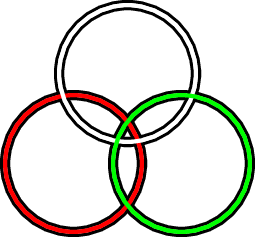
The great saint Bonaventure wrote many powerful works, but one that I have seen rarely examined, and even more rarely (if ever) translated, is The Threefold Way, subtitled incendium amoris, The Fire of Love. This short work (only twenty-five pages in the Latin, much less with footnotes removed) explores the threefold spiritual life: the purgative, the illuminative, and the contemplative ways. This series will be an ongoing translation project, in which we will English the saint's nobly simple Latin, for the benefit of all.
It is ongoing, and thus is necessarily a draft; if something sounds funny, please consult the Latin! And then let me know if I've gotten something wrong.
This installment: the conclusion of the work!
If this is new to you, start with Part I, Part II, Part III, and Part IV, Part V, and Part VI, then return here.
§ 6 Another Distinction on Accomplishing the Nine Steps
9. Note that the steps of accomplishment can also be otherwise distinguished accoding to the threefold difference divided into three, the harmonious threefold hierarchy. For three things are necessary for anyone after the fall; namely, bitterness, thankfulness, and likeness. For if man had not sinned, two would suffice; that is, thankfulness and likeness; thankfulness on account of grace and likeness on account of justice. But now bitterness is also necessary, on account of healing. For committed sins cannot be wiped away by delight, unless afflicted sorrow intervenes.
In bitterness should be the weight of evils on account of our own wicked deeds, remembrance of sorrows on account of the straits of Christ, petition of remedies on account of miseries of our neighbor.
In thankfulness should be wonder at kindnesses on account of creation from nothing, the bringing to nothingness of merits on account of our restoration from sin, and act of thanksgiving on account of our deliverance from hell. For it was creation in the image, redemption through His own blood, deliverance even to the height of heaven.
In likeness ought to be the appearance of truth brought up to higher things, disposition of charity broadened to exterior things, acts of manfulness ordered to interior things; as thus occurs the elevation above thyself through the appearance of truth, and this by the contemplation of divine things; understanding, through the consideration of all things; knowledge, through the subjugation of judgments, shaped by faith. — Again, the expansion around thyself ought to be done diligently by the disposition of charity, and this by the desire of hidden heavenly things, in wisdom; through the embrace of rational things, in friendship; by the disdain for bodily pleasures, in restraint. — Again, exercise within thyself ought to be by an act of manfulness, and this by the assault of difficult things, in activity; by an act of praise, in generosity; through the embrace of humble things, in humility.
10. But purification ought to be in bitterness, in which is sorrow regarding onself; it ought to be sorrowful by sadness because of evils oppressing thee thyself, Christ, and neighbor. — Compassion regarding Christ ought to be fearful through respect on account of hidden judgments, and nevertheless true, although uncertain as to time, day, and hour. — Pity regarding neighbor ought to be clamorous by confidence on account of the protection always prepared by God, by Christ, and by the aid of the saints.
Enlightenment in likeness, in which is the appearance of the first truth raised up to incomprehensible things, expanded to understandable things, emptied to believable things; in which also is the disposition of charity raised up to God, spread to neighbor, and emptied to the world; act of manfulness, built up to praiseworthy things, spread out to communicable things, emptied to contemptible things.
Perfection is in thankfulness, in which is vigilance rising up to song on account of the usefulness of kindnesses; joy leaping up to melody on account of the preciousness of gifts; goodwill approaching embrace on account of generosity of giving.
§ 7 On the Twofold Contemplation of Divine Things
11. Note, that the appearance of truth ought to be directed to incomprehensible things, and these are the mysteries of the all-high Trinity, to which we are raised by contemplation, and this in two ways: either through adding or by taking away. Augustine speaks of the first, Dionysius the second.
By adding we understand first to be certain things as common in the divine Persons, certain things as proper, and certain things as appropriate, which indeed are between the first and second. Understand, therefore, and consider, if thou canst, common things concerning God, and see that God is the first essence, complete nature, and blessed life, which they have as a necessary consequence. — On the other hand, listen and see, if thou canst, that God is present eternity, full simplicity, and steadiness in motion, which they likewise have as a consequence and a natural connection. — Afterwords hear that God is unapproachable light, unchanging mind, and incomprehensible peace; which includes not only the unity of essence, but also the most perfect Trinity. Visible light, indeed, just as it begets splendor, splendor and light produce heat, and thus heat proceeds from both, though not in the manner of offspring. If, therefore, God is truly unapproachable light, where splendor and heat is substance and person, truly in God is the Father and the Son and the Holy Spirit, which are proper to the divine Persons. — Mind, also, just as it forms the principle and produces the word from itself, from which flows out the gift of love; and this is to be discovered in every complete mind. If, therefore, God is unchanging mind, it is plain that in the divine esse is the first Principle, the eternal Word, the complete Gift, which is proper to the divine Persons. — Peace also includes the bond of many; and they cannot be perfectly bonded unless they are alike; but they are not alike, unless they are both from the third, or one from the other. But in the divine Persons both cannot be from the third in the same way; it is necessary, therefore, that if there is true peace in the divine Persons, that therefore there be a first origin, its image, and the connection of both.
12. Then, in the divine Persons there are appropriate things, according to the threefold distinction. — The first appropriate things are unity, truth, and goodness. Unity is attributed to the Father, because He is the origin; truth to the Son, because He is the image; goodness to the Holy Spirit, because He is the connection.
The second appropriate things are power, wisdom, and will; power is to the Father, because He is the Principle; wisdom to the Son, because He is the Word; will to the Holy Spirit, because He is the Gift.
The third appropriate things are highness, beauty, and sweetness; highness is to the Father, on account of unity and power. For nothing else is highness but unique and singular power. Beauty is to the Son, on account of truth and wisdom. For wisdom includes a multitude of ideas, and truth the equality of ideas; “and beauty is nothing other than manifold equality”. Sweetness is to the Holy Spirit, on account of will and goodness. Where the greatest goodness is joined with will, there is the greatest love and the greatest sweetness. — Therefore, there is in God a terrible highness, a wonderful beauty, a desirable sweetness, and this is its situation. — This lifting up is, therefore, by the way of affirmation.
13. But this is more notable according to the way of negation, because, as Dionysius says, “affirmations are confined, negations are true”, for although they seem to say less, they say more. And this way of lifting up is by the denial of everything; because thus there should be order in those negations, by beginning from lower things and proceeding to higher, there might also be inclusion of the overarching affirmation, as when it is said: God is not what is sensible, but above sense; neither is He imaginable nor understandable nor visible, but He is above all these things. And then the appearance of truth comes in the darkness of the mind, and it is raised up higher and proceeds more deeply, on behalf of that which exceeds itself and every created thing. And this is the most noble way of raising up; but, however, to this, because it is perfect, it presumes the other, just as perfection presumes enlightenment, and just as negation presumes affirmation. And this way of ascending is so much stronger, inasmuch as the ascending power is more interior; so much more fruitful, insomuch as the disposition is nearer. And therefore, it is very useful to be done in that way.
14. Note, that in the first hierachy Truth must be called for through prayer and groaning, and this is of the Angels; must be heard through study and reading, and this is of the Archangels; must be announced by example and preaching, and this is of the Principalities. — In the second hierarchy Truth must be approached by refuge and commission, and this is of the Powers; must be apprehended by zeal and imitation, and this is of the Virtues; must be joined through contempt and mortification of self, and this is of the Dominations. — In the third hierarchy, Truth must be adored by sacrifice and praise, and this is of the Thrones; must be wondered at by excess and contemplation, and this is of the Cherubim; must be embraced with kiss and love, and this is of the Seraphim. Note the aforesaid things carefully, for the source of life is in them.